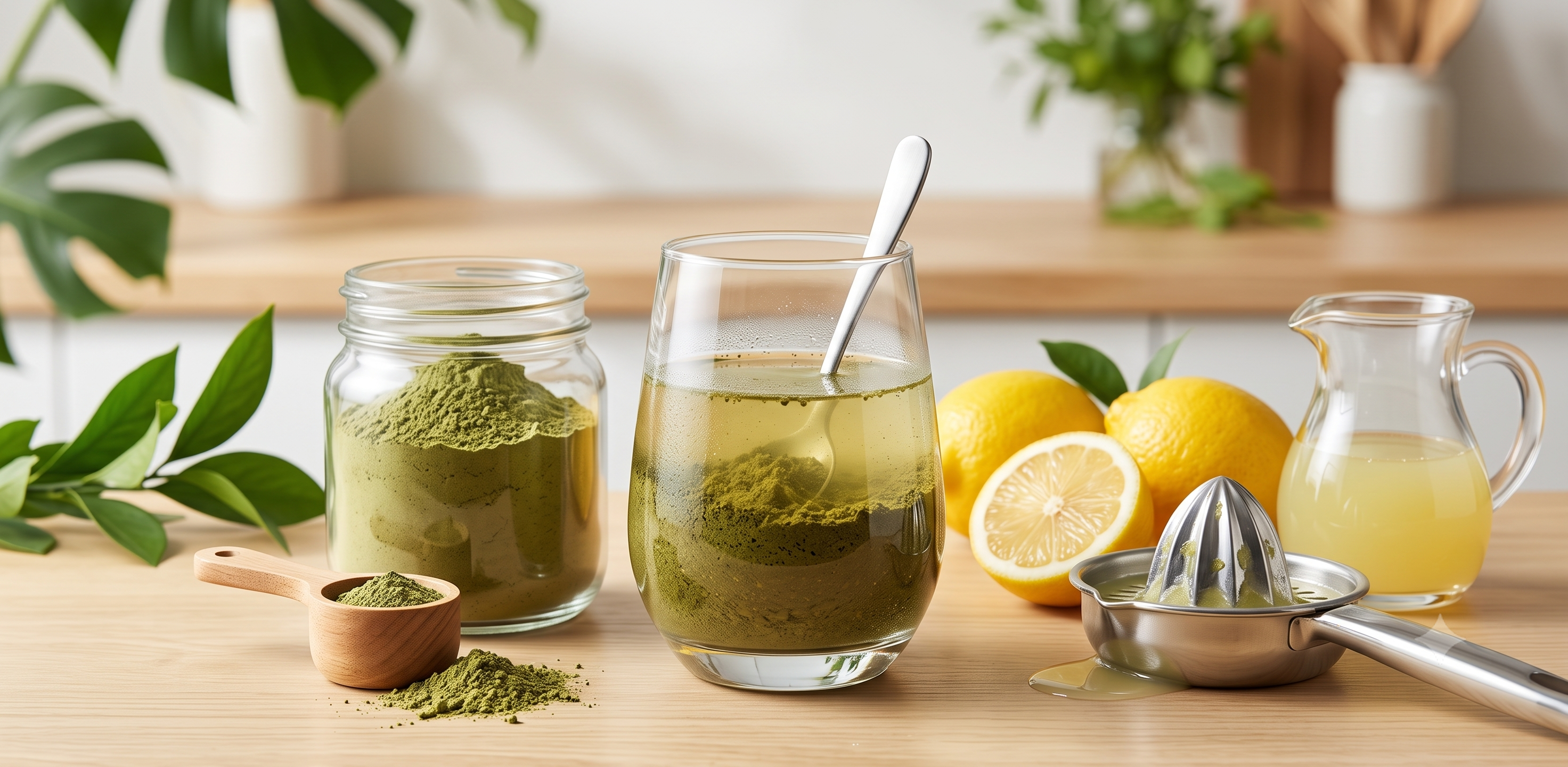
If you've ever looked up tips for preparing Kratom, you've probably come across the same advice: "Add a little lemon juice." It's one of those recommendations that seems to pop up everywhere, but have you ever wondered if there's actually any truth behind it? Is the Kratom lemon juice combination really worth trying, or is it just another popular claim that's been passed around for years?
The answer isn't as simple as a yes or no. While some people swear by it, science paints a more complex picture. Let's take a closer look at where this idea came from, what researchers have found so far, and whether mixing Kratom with lemon juice lives up to the hype.
Table Of Contents:
- Why Do People Mix Kratom With Lemon Juice?
- Where Did The Idea Of Mixing Kratom And Lemon Juice Come From?
- So, What Does Science Say About Kratom Lemon Juice?
- Common Claims About Lemon Juice And Kratom—Fact Or Myth?
- Finally, Should You Add Lemon Juice To Kratom?
- FAQs
Why Do People Mix Kratom With Lemon Juice?
People mix Kratom with lemon juice for different reasons, and not all of them have to do with making it "stronger." While some simply prefer the citrus flavor, others believe that lemon juice changes how Kratom is prepared or how it interacts with its naturally occurring alkaloids.
Here's a quick breakdown of the most common reasons behind this popular combination.
- To reduce bitterness: Kratom has a naturally earthy, bitter taste. Lemon juice can make it more refreshing, especially when preparing tea.
- To help extract alkaloids during brewing: Since lemon juice is acidic, many believe it helps draw more alkaloids out of the plant material when steeped in hot water.
- To experiment with preparation methods: Some users enjoy trying different ways to prepare Kratom and include lemon juice as part of that process.
- Because they believe it enhances the experience: One of the most common claims is that lemon juice makes Kratom more effective. Whether that's actually true is something we'll explore later in the article.
Many of the discussions around adding lemon juice involve people experimenting with their own brewing routines. If you're doing the same, Kratom Euphoria Powder is one option you can prepare using either method and compare for yourself.
Where Did The Idea Of Mixing Kratom And Lemon Juice Come From?
The truth is, there's no single person or event that started the idea of making Kratom lemon juice. Instead, it seems to have evolved over time as people experimented with different ways to prepare Kratom and shared their experiences with others.
So, What Likely Started It?
|
Possible Influence |
Why It Matters |
|
🌿 Traditional Kratom tea |
Kratom has been brewed into tea in Southeast Asia for generations. Citrus may have been added for flavor, although historical evidence is limited. |
|
🧪 A bit of chemistry |
Since lemon juice is acidic, people began to wonder whether it could help extract more alkaloids from the plant during brewing. |
|
💬 Community experimentation |
As Kratom became more popular, users started comparing preparation methods on forums, blogs, and Reddit. |
|
📢 Word spread quickly |
What began as a few personal experiments eventually became one of the most widely shared Kratom tips online. |
|
💡 Did You Know? You might have heard of Lemon Tek, a preparation method commonly associated with psilocybin mushrooms. It also involves soaking the material in lemon juice before consumption, which is why it's often compared to Kratom. While the idea is similar, the two involve different natural compounds, so the science behind them isn't the same. |
One thing is clear, though: the popularity of this method grew much faster than the research behind it. And that's exactly why the next question is the one that matters most—does the science actually support the claims?
So, What Does Science Say About Kratom Lemon Juice?
The short answer is there's some science behind the idea, but not enough to prove all the claims you've probably seen online.
Researchers understand how lemon juice behaves during brewing and know quite a bit about Kratom's naturally occurring alkaloids. The part that's still missing is clear evidence showing that adding lemon juice leads to a stronger or longer-lasting experience in people.
So before deciding whether the hype is justified, it helps to understand where the theory comes from.
The Theory Behind Mixing Kratom And Lemon Juice
At first glance, the idea actually makes sense.
Here's why many people believe lemon juice could make a difference:
✅ Lemon juice is acidic.
Citric acid lowers the pH of the brewing liquid.
✅ Kratom contains naturally occurring alkaloids.
The two best-known are mitragynine and 7-hydroxymitragynine.
✅ Acidic conditions may help with extraction.
In laboratory chemistry, acids are often used to help extract alkaloids from plant material.
Does Better Extraction Mean Stronger Effects?
This is probably the biggest misconception surrounding Kratom and lemon juice. It's easy to assume that extracting more alkaloids from the plant automatically means stronger effects, but those are actually two different things.
Think of it like this:
|
Step |
What It Means |
|
Extraction |
Pulling alkaloids out of the plant material during brewing. |
|
Absorption |
How much of those compounds enter your bloodstream after consumption? |
|
Effects |
How your body responds once those alkaloids have been absorbed. |
Improving the first step doesn't necessarily change the other two.
Researchers know that many factors can influence the overall experience, including:
- Individual metabolism
- Preparation method
- The alkaloid profile of the Kratom itself
- Product quality and freshness
Because of these variables, it's difficult to attribute any noticeable difference solely to lemon juice.
Note: Whether you're preparing a classic Kratom powder or a blend like Trainwreck Kratom Powder, the same principle applies: changing the brewing method doesn't automatically change how your body responds.
What Does The Research Actually Say?
So, has science confirmed that making Kratom lemon juice makes it more effective? Not yet.
Here's what the current evidence tells us:
✅ What Research Supports
- Laboratory research has identified mitragynine as Kratom's primary alkaloid and confirms that acidic environments can influence how plant compounds are extracted during preparation.
- Studies investigating Kratom chemistry have helped researchers better understand the stability and behavior of its alkaloids under different conditions.
⚠️ What Research Hasn't Confirmed
- No published human clinical studies have shown that adding lemon juice consistently makes Kratom stronger.
- There's no clinical evidence that lemon juice increases alkaloid absorption in the body.
- Current research hasn't confirmed that lemon juice extends the duration of Kratom's effects or speeds up their onset.
Common Claims About Lemon Juice And Kratom—Fact Or Myth?
It's easy to see how some of these claims became so popular. After all, when enough people repeat the same advice, it starts to sound like a fact. But before you take everything at face value, let's test the most common claims in theory:
|
Common Claim |
Verdict |
Reality Check |
|
Lemon juice helps reduce Kratom's bitter taste. |
✅ Fact |
Lemon juice's citrus flavor can help mask Kratom's naturally bitter, earthy taste, especially when prepared as tea. |
|
Lemon juice helps extract Kratom alkaloids during brewing. |
⚠️ Partly True |
Acidic conditions can aid alkaloid extraction, which is why this idea has scientific support. However, this doesn't automatically mean the final preparation will be more effective. |
|
Adding lemon juice makes Kratom significantly stronger. |
❌ Myth |
There are no human clinical studies confirming that lemon juice consistently increases Kratom's potency. Most support comes from anecdotal reports. |
|
Lemon juice increases alkaloid absorption in the body. |
❌ Myth |
Current research hasn't shown that lemon juice improves how much of Kratom's alkaloids are absorbed after consumption. |
|
Lemon juice makes Kratom last longer. |
❌ Myth |
This claim is widely discussed online but hasn't been confirmed through scientific research. |
|
Lemon juice is commonly added when making Kratom tea. |
✅ Fact |
Many people add lemon juice to Kratom tea for flavor and because they believe it may help with preparation. |
|
The science behind lemon juice and Kratom is completely settled. |
❌ Myth |
Research on Kratom is still evolving, and many claims about lemon juice remain unverified in human studies. |
Finally, Should You Add Lemon Juice To Kratom?
Yes—but with realistic expectations.
If you're adding lemon juice because you enjoy the flavor of Kratom tea with lemon or simply want to try a different brewing method, it's a perfectly reasonable option. There's also enough chemistry behind the idea to understand why it has become such a popular preparation tip.
However, if you're expecting lemon juice to consistently make Kratom stronger, last longer, or work better, the current research doesn't support those claims.
Here's the takeaway:
- 🍋 Go for it if you're looking to improve the flavor or experiment with your brewing routine.
- 🧪 Don't expect guaranteed results beyond that, as human studies haven't confirmed the bigger claims.
- 📚 Keep an eye on future research. As scientists continue studying Kratom, we'll likely learn more about how different preparation methods influence its chemistry.
If you enjoy experimenting with different ways to prepare Kratom tea, a finely ground powder like Professor Whyte's Kratom Uplift Powder is well-suited for brewing.
FAQs
Does Lemon Juice Improve Kratom Tea?
Yes, lemon juice can improve Kratom tea, but mostly in terms of preparation and flavor. Its citrusy taste helps balance Kratom's natural bitterness, and its acidity may aid alkaloid extraction during brewing.
However, current research hasn't confirmed that it consistently makes Kratom tea stronger or more effective.
Tip: If you're preparing tea at home, a powdered Kratom product, such as Kratom Calm Powder, is generally the most suitable format for brewing.
Is Lemon Better Than Other Citrus Fruits?
Not necessarily. Lemon, lime, and other citrus fruits all contain citric acid, which creates an acidic brewing environment. While lemon is the most commonly used option, there's no scientific evidence showing that it's significantly better than other citrus fruits for preparing Kratom tea.
Does Lemon Juice Make Kratom Stronger?
There's no conclusive scientific evidence that lemon juice makes Kratom stronger. Although acidic conditions may help extract alkaloids during brewing, human studies haven't shown that adding lemon juice consistently increases Kratom's potency, duration, or overall effects.
Can You Mix Kratom With Lemon Juice Every Day?
Yes, you can mix Kratom with lemon juice every day if you enjoy the flavor or prefer it as part of your brewing routine.
How Long Should Kratom Sit In Lemon Juice?
There's no scientifically established soaking time for Kratom and lemon juice.
Some people let Kratom sit in lemon juice for 15–30 minutes before brewing or preparing tea, but this practice is based on community experience.
Is Fresh Lemon Juice Better Than Bottled Lemon Juice?
Fresh lemon juice is often preferred because it contains no added preservatives or sweeteners. That said, there's no research showing that fresh lemon juice works better than bottled lemon juice when preparing Kratom.
Does Lemon Reduce Kratom's Bitter Flavor?
Yes. Lemon juice is commonly added to Kratom tea because its bright, citrusy flavor can help balance Kratom's naturally bitter and earthy taste. While it won't completely remove the bitterness, many people find the tea more pleasant to drink with a squeeze of lemon.
Disclaimer: This article is intended for informational purposes only. While it discusses the combination of lemon juice and Kratom, current research has not confirmed that adding lemon juice consistently changes Kratom's potency, duration, or effects. Individual experiences may vary.