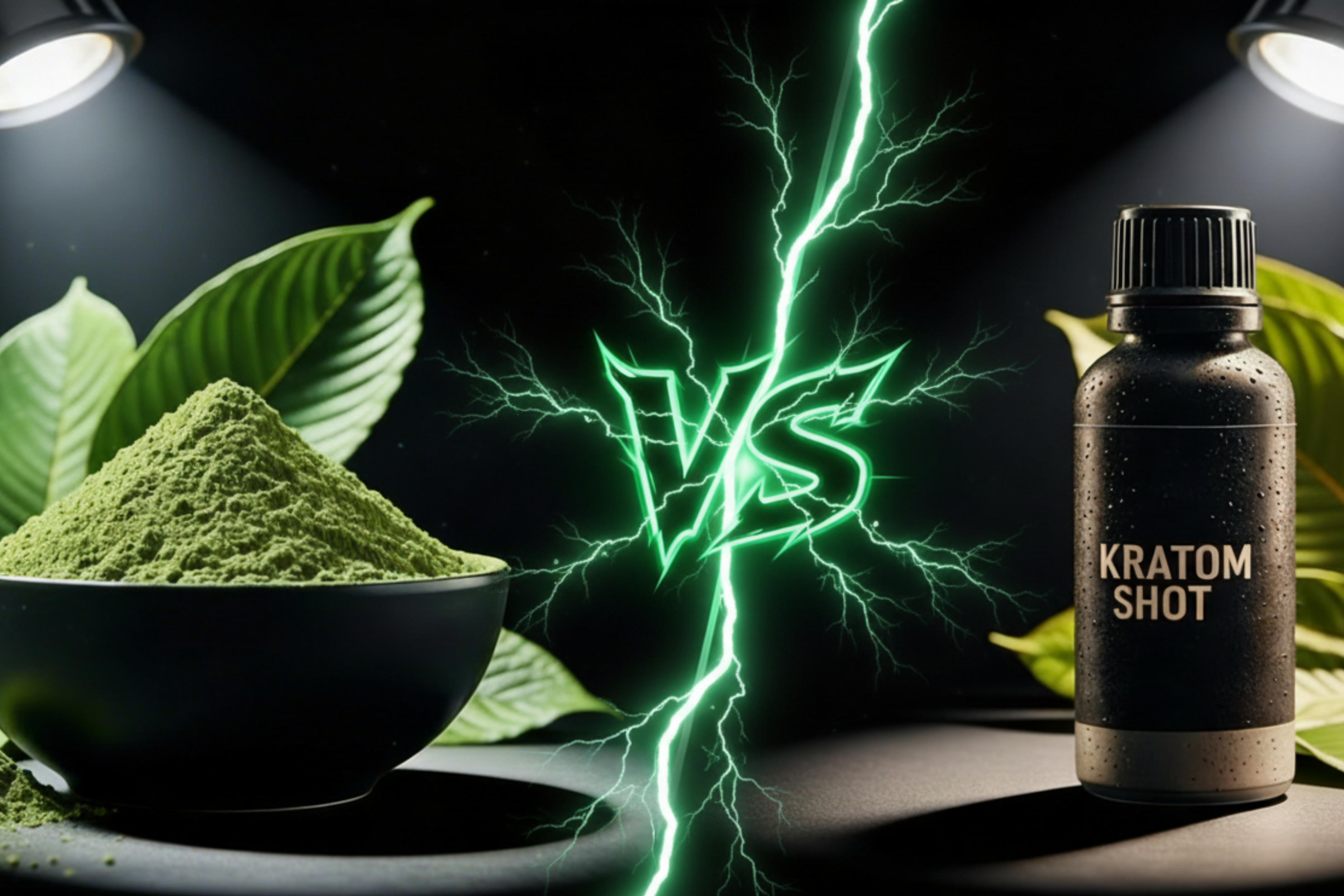
With kratom developing further in the market, nowadays consumers can take this botanical in many forms, starting with traditional powder and moving to liquid shots. The comparative analysis of the kratom shots vs powder will help you in selecting the form that suits your lifestyle and preferences. The following is an in-depth comparison of what each is, how they are manufactured and the experience and usability differences between them.
What Is Kratom Powder?
The most classic and common kratom is the kratom powder. It is prepared by drying and grinding the leaves of the Mitragyna speciosa tree. Every batch preserves a pool of naturally occurring plant compounds, with one of them being the alkaloid mitragynine that is believed to be a determining factor in how kratom presents itself on the whole.
Kratom powder:
- It is prepared out of dry kratom leaves.
- Can be combined as drinks, food or can be brewed up as tea.
- It tastes very earthy, and many users cover this flavor with other drinks.
Users typically put powder in juices or smoothies, make tea, or do the toss and wash technique of directly ingesting it. Powder is flexible in dosing but will have to be prepared on a case-by-case basis.
Read a full blog on How to Prepare Kratom Powder here.
What Are Kratom Shots?
Kratom shots are a more recent form of the product, typically formulated using concentrated liquid kratom extract. Instead of working with the raw powder, manufacturers work with kratom leaves, extracting the active compounds and concentrating them into a small liquid bottle. Such shots are usually combined with taste additives to offset the bitter taste of kratom and can have other components such as sweeteners or plant-based additives.
Key points about kratom shots:
- They include extracted kratom.
- Typically packaged in small/portable bottles.
- Flavored often to make them easier to consume.
- May produces effects faster because of liquid form.
Shots can contain the equivalent of grams of active compounds of powder in one shot due to their concentration.
Kratom Shots vs Powder: How They Compare
The following is a table showing the differences between these two formats:
1. Form and Preparation
- Powder: Dry, granular, which has to be measured and blended or brewed.
- Shots: Ready-to-drink liquid, which does not have to be prepared.
Quick takeaway: Shots are more convenient, but powder offers more flexibility.
2. Convenience and Portability
- Powder: More portable but less versatile; it is necessary to use the instruments such as a scale or scoop.
- Shots: Small and can be carried anywhere without requiring any preparation.
Quick takeaway: Shots are easier to accommodate busy lives or even a scenario where food preparation is not feasible.
3. Potency and Onset
- Powder: Powder can take a longer duration to act, because it has to go through the digestive system; the action time may require 30- 60 minutes or even more than that after taking.
- Shots: Liquid form and extraction process could result in an earlier onset, and an effect could start within 15- 30 minutes.
Quick takeaway: Shots can be more aggressive, and act faster, as some users like.
4. Taste and Palatability
- Powder: Strong, earthy flavor that many people find bitter.
- Shots: Usually flavored to make them more palatable.
Quick takeaway: If taste is a concern, shots may be more pleasant.
5. Dosing and Serving Control
- Powder: Customizable—you can adjust your portion each time.
- Shots: Often pre-measured for consistency, which helps avoid mis-measuring.
Quick takeaway: Shots offer consistent dosing, while powder lets you tailor amounts.
Read more: Kratom Capsules vs Liquid Kratom
How Are Kratom Shots Made?
The kratom shots are produced by a process that separates the active alkaloids of the initial plant substance. Manufacturers boil, boil and/or steep, or impregnate kratom leaves or powder so that it extracts these substances, which are then filtered and concentrated into a liquid. A finished product is ready by adding flavorings and other ingredients that are easy to ingest.
This technique of extraction usually provides a more refined liquid than usual powder. It is due to this that one kratom shot bottle has the potential of holding the equivalent of several grams of kratom powder of the active components.
Who Might Prefer Each Form?
Powder Might Be Better If You:
- Desire that you have control over your portions.
- Likes traditional styles and does not dislike preparation.
- Budget-conscious, as powder may be cheaper.
- Enjoy consuming kratom tea or any other DIY kratom.
Shots Might Be Better If You:
- Want an on-the-go drink that does not require measurement.
- Like tasty, packaged portions.
- Need a potentially quicker-moving product.
- Similar to regular, predefined dosage.
Considerations Before Choosing
While kratom shots and powder offer distinct experiences, there are a few things to keep in mind:
- Kratom products are not regulated or approved by the U.S. Food and Drug Administration, and quality and potency can vary widely between brands.
- According to the Reports by The Sun, have noted wide inconsistencies and safety concerns with some products, especially when purchasing from unverified retail sources.
- Potency differences mean dosing carefully and understanding serving sizes is important regardless of format.
Because kratom shots often contain concentrated extracts, it’s especially important to check product labels and understand how much is in each bottle before consuming.
FAQs
1: Are kratom shots stronger than kratom powder?
Kratom shots are often more concentrated than traditional kratom powder, which can make their effects feel stronger or faster. However, potency varies by product, serving size, and alkaloid content.
2: Which is more convenient, kratom shots or powder?
Kratom shots are ready to drink and require no preparation, making them ideal for on-the-go use. Kratom powder offers more flexibility in serving size but typically requires measuring and mixing.
3: Is kratom powder more cost-effective than kratom shots?
In many cases, kratom powder provides more servings per dollar and can be a more economical option for regular users. Kratom shots generally cost more due to their convenience and concentrated formulation.
4. Are Kratom drink mixes more affordable than ready-to-drink beverages?
In many cases, yes. Kratom drink mixes often provide multiple servings per package, while ready-to-drink beverages are typically purchased individually. Pricing varies by brand and product format.
5. Which option offers more flavor variety?
Kratom drink mixes often provide more opportunities for customization because they can be mixed with different beverages such as water, juice, sparkling water, or iced tea. Ready-to-drink products are limited to the flavors offered by the manufacturer.
6. Which option offers more flavor variety?
Kratom drink mixes often provide more opportunities for customization because they can be mixed with different beverages such as water, juice, sparkling water, or iced tea. Ready-to-drink products are limited to the flavors offered by the manufacturer.
7. Are Kratom drinks more convenient than drink mixes?
Yes. Ready-to-drink Kratom beverages require no preparation and can be consumed immediately. Drink mixes require mixing and preparation before use.
8. Do Kratom drinks and drink mixes come in different flavors?
Yes. Both product formats are available in a variety of flavors. Common options include fruit-inspired, citrus, tropical, berry, and tea-style flavors.
9. Which is better for travel: Kratom drinks or drink mixes?
Both options can be travel-friendly. Ready-to-drink beverages offer immediate convenience, while drink mix sachets are lightweight, compact, and easy to carry when space is limited.
10. Do Kratom drink mixes take a long time to prepare?
No. Most drink mixes can be prepared in just a few minutes by combining the powder with a preferred beverage and stirring or shaking until mixed.
11. is there a best choice between Kratom drinks and drink mixes?
There is no single best choice. Ready-to-drink beverages are often preferred for convenience, while drink mixes are often chosen for flexibility, portability, and flavor customization.
Final Thoughts
Both kratom shots vs powder are not necessarily better, each of them fulfills another role. Powder has flexibility and classic choices whereas shots have convenience and possible faster onset as a result of extraction and liquid delivery. The decision that you make should be based on your own preferences, your style of life, and your intended purposes of the product. As the products of kratom are not regulated and are variable, careful label reading and informed decision-making is paramount.
Disclaimer:
This content is for informational purposes only and does not provide medical advice or endorse kratom for any health-related use.