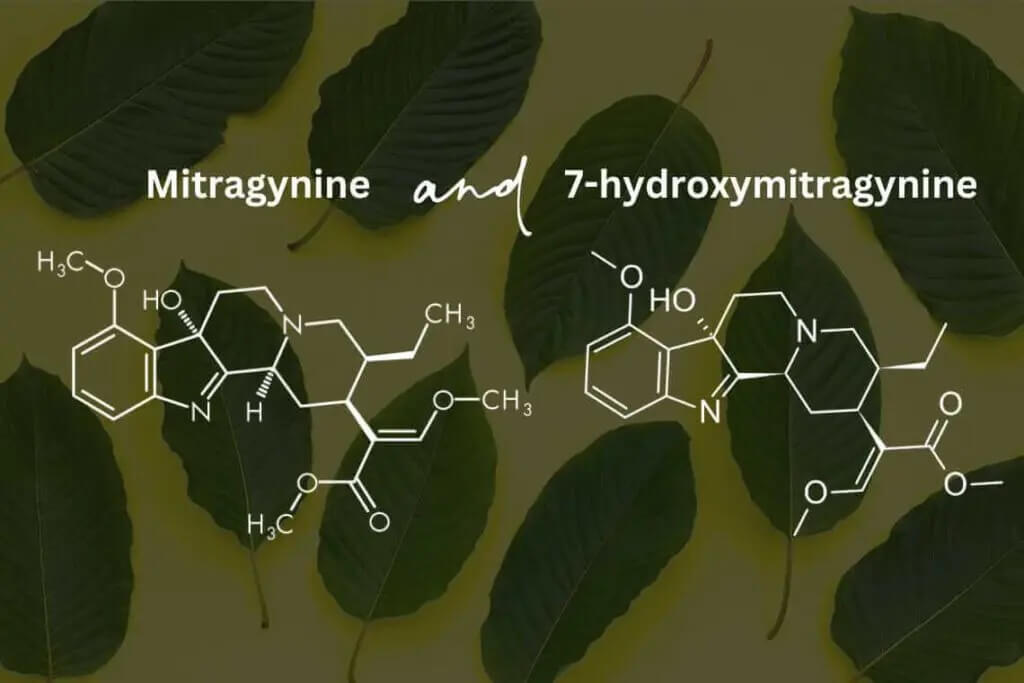
Kratom Alkaloids Beyond Mitragynine: A List of Compounds Found in the Kratom Leaf
Kratom is often discussed in terms of strains, colors, or effects, but at its core, Kratom is defined by its alkaloid profile. Alkaloids are naturally occurring plant compounds that interact with biological systems in specific and measurable ways. In Kratom, these alkaloids work together to create the plant’s unique characteristics.
Scientific analysis has identified more than 40 alkaloids within the Kratom leaf. While only some are present in high concentrations, many minor and trace alkaloids play important regulatory and balancing roles, check out the article by PubMed for more information on Kratom Alkaloids.
This guide presents a complete Kratom alkaloids list with clear explanations, scientific context, and regulatory considerations to help readers understand how these compounds function collectively.
Understanding Kratom Alkaloids: An Introduction
Kratom alkaloids belong primarily to the indole and oxindole alkaloid families, a class of compounds studied extensively in pharmacognosy and natural product chemistry. Unlike isolated pharmaceutical compounds, Kratom alkaloids exist in a complex botanical matrix, meaning their effects are influenced by ratios, interactions, and metabolism rather than single compound dominance.
Research published in Nature Scientific Reports confirms that Kratom’s pharmacology cannot be attributed to mitragynine alone. Instead, Kratom behaves as a multi alkaloid system, where both major and minor compounds contribute to overall activity.
This complexity explains why Kratom products with similar mitragynine percentages can feel noticeably different depending on their full alkaloid composition.
The Role of Alkaloids in Kratom Tolerance and Dependence
Tolerance development is closely linked to how alkaloids interact with receptors over time. Kratom alkaloids primarily act as partial agonists, meaning they activate receptors without fully overstimulating them. This mechanism differs significantly from full agonists found in conventional opioids.
Minor alkaloids such as speciociliatine and corynantheidine may influence receptor signaling efficiency, potentially moderating tolerance escalation. Studies indexed through PubMed suggest that alkaloid diversity may reduce abrupt receptor adaptation compared to isolated compounds.
Understanding alkaloid balance is therefore essential when evaluating Kratom use patterns and long term effects.
Top Alkaloids in Kratom and Their Effects
The prevalence of Kratom use varies, with past year and lifetime prevalence ranging from 0.7% to 6.1% in the United States among varying populations. Learn more about the Kratom, its alkaloids and their effects through PubMed.
Mitragynine
Mitragynine is the most abundant alkaloid in Kratom leaves and often accounts for a significant portion of total alkaloid content. It interacts primarily with opioid receptors while also influencing adrenergic pathways.
Importantly, mitragynine functions as a partial agonist, meaning it activates receptors in a controlled manner rather than fully stimulating them. This characteristic is one reason Kratom exhibits a different pharmacological profile compared to traditional opioids. Read more about “What Is Mitragynine (MIT)? The Primary Kratom Alkaloid Explained”.
Paynantheine
Paynantheine is one of the most prominent secondary alkaloids in Kratom. Research published in the Journal of Natural Products suggests that paynantheine may contribute to smooth muscle interaction and neuromuscular modulation.
While it does not strongly bind to opioid receptors, its presence influences how other alkaloids are perceived in the body.
Speciogynine
Speciogynine typically occurs alongside paynantheine and represents a meaningful percentage of Kratom’s alkaloid makeup. It is believed to contribute to muscular and neuromotor effects while acting as a stabilizing compound within the alkaloid spectrum.
Speciogynine’s value lies in its ability to balance stronger alkaloids rather than dominate activity.
Speciociliatine
Speciociliatine is present in smaller quantities but holds significant pharmacological interest. Studies by PubMed suggest it binds to opioid receptors differently than mitragynine, potentially altering receptor response rather than directly activating it.
This interaction highlights why even low concentration alkaloids can meaningfully influence Kratom’s overall profile.
Isopteropodine
Isopteropodine is an oxindole alkaloid found in trace amounts. While research is still ongoing, it has been studied for potential immunomodulatory and regulatory properties. Its role appears supportive rather than primary, contributing to alkaloid synergy.
How Kratom Alkaloids Interact with the Body
Kratom alkaloids interact with multiple biological systems rather than targeting a single receptor type. These interactions include opioid receptors, adrenergic receptors, and serotonergic pathways.
This multi pathway engagement explains why Kratom is often described as having layered effects rather than a single dominant response. According to pharmacological reviews indexed in PubMed, this receptor diversity is uncommon among botanical compounds and contributes to Kratom’s classification challenges.
Rather than functioning as a stimulant or depressant alone, Kratom’s alkaloids adapt based on dosage, ratios, and individual metabolism.
Testing and Regulation of Kratom Alkaloids in the U.S.A.: State Specific Insights
Testing and regulation of Kratom alkaloids in the United States are not governed by a single federal framework. This creates a fragmented regulatory environment where Kratom legality, testing requirements, and product expectations vary widely from one state to another.
At the federal level, Kratom is not approved as a dietary supplement or drug by the Food and Drug Administration (FDA). However, the FDA does not regulate routine Kratom testing or set standardized alkaloid limits. Similarly, Kratom is not scheduled under the Controlled Substances Act by the Drug Enforcement Administration (DEA), leaving states to determine their own regulatory paths.
States With Kratom Consumer Protection Acts (KCPA)
Several states have adopted versions of the Kratom Consumer Protection Act, which focuses on transparency, alkaloid testing, and consumer safety. In these states, Kratom products are typically required to:
- Be tested by third-party laboratories
- Clearly label alkaloid content (including mitragynine levels)
- Avoid adulterants, synthetic alkaloids, or harmful additives
- Meet age-restriction and packaging standards
States such as Utah, Arizona, Georgia, Nevada, and Oklahoma follow this model, creating clearer expectations for both consumers and brands. Know “Is Kratom legal?” in your state here.
States With Partial Restrictions or Bans
Some states and local jurisdictions restrict or ban Kratom outright. In these areas, testing standards become irrelevant because sale and distribution are prohibited. This highlights how Kratom legality can change not only by state but sometimes by county or city.
States With Minimal or No Regulation
In states without KCPA laws or bans, Kratom exists in a largely unregulated space. Testing is not legally required, so quality control depends heavily on brand responsibility. Reputable vendors often self-regulate by conducting alkaloid testing and publishing Certificates of Analysis (COAs), even when not mandated.
Why Alkaloid Testing Matters
State-level testing frameworks emphasize alkaloid transparency to ensure products contain naturally occurring compounds only and remain free from contaminants such as heavy metals, pathogens, or synthetic enhancers. For consumers, this makes it easier to evaluate safety, consistency, and product integrity across different markets.
Overall, Kratom regulation in the U.S. remains state-driven rather than federally standardized, making it essential for consumers and businesses alike to stay informed about local laws and testing expectations.
Kratom Alkaloids List: Benefits and Uses
The benefits associated with Kratom are not tied to a single alkaloid but rather to alkaloid synergy. Major alkaloids drive primary effects, while secondary and minor compounds influence duration, balance, and smoothness.
Scientific consensus increasingly recognizes that full spectrum alkaloid profiles are more representative of natural Kratom than isolated compounds.
Comparing Kratom Alkaloids: Which Are Most Potent?
Potency in alkaloid science refers to receptor affinity relative to concentration. Some alkaloids exert meaningful influence despite low abundance because they alter how receptors respond to dominant compounds.
Below is a simplified comparison.
Kratom Alkaloid Comparison Table
|
Alkaloid |
Relative Abundance |
Primary Role |
|
Mitragynine |
High |
Core activity driver |
|
Paynantheine |
Moderate |
Muscle modulation |
|
Speciogynine |
Moderate |
Neuromotor balance |
|
Speciociliatine |
Low |
Receptor modulation |
|
Isopteropodine |
Trace |
Regulatory support |
|
Corynantheidine |
Trace |
Opioid antagonism |
This comparison highlights why alkaloid diversity often matters more than sheer concentration. Read what the PubMed has to say clearly about the potency of Kratom alkaloids.
User Experiences: The Impact of Different Kratom Alkaloids
User reports frequently reflect differences in alkaloid balance rather than strain names. Products with higher secondary alkaloid presence are often described as smoother or more balanced.
These observations align with scientific findings that minor alkaloids influence receptor behavior even at low levels.
Kratom Alkaloids in Different Strains: A Comparative Analysis
Different Kratom strains vary primarily in alkaloid ratios, not in unique alkaloid presence. Regional growing conditions, leaf maturity, and processing methods influence these ratios.
Strain charts help illustrate these variations, but they should be viewed as general guidelines rather than exact chemical maps.
Which Is the Best Place to Buy Kratom Products Online?
The best place to buy Kratom products online is a vendor that prioritizes transparency, testing, and consistency, making it easier for readers to trust what they’re purchasing.
Reputable online sellers clearly list strain types, product formats, and batch-level details, while also offering third-party lab testing and educational resources to help buyers make informed decisions. Brands like Professor Whyte’s focus on clearly labeled Kratom capsules, powders, and extracts, allowing readers to explore products confidently.
For readers who want a deeper breakdown of online vendors, testing standards, and quality indicators, you can read the blog on where to buy Kratom online.
Conclusion
Kratom is not defined by a single compound. It is defined by a complex alkaloid ecosystem that includes more than 40 naturally occurring compounds working together.
Understanding this full Kratom alkaloids list allows consumers, researchers, and regulators to move beyond simplified narratives and toward informed evaluation.
FAQs
What are the most important alkaloids in Kratom?
Mitragynine is the most abundant, but secondary alkaloids such as paynantheine and speciogynine play critical balancing roles.
How do Kratom alkaloids affect the body?
They interact with multiple receptor systems, including opioid and adrenergic pathways, creating layered physiological responses.
Which Kratom strain has the highest alkaloid content?
Alkaloid content varies by harvest and processing rather than strain name alone.
Are there any side effects of Kratom alkaloids?
Effects depend on dosage, frequency, and individual sensitivity, as with any botanical compound.
What is the best way to use Kratom for its alkaloid benefits?
Consistency, moderation, and choosing full-spectrum products with verified alkaloid profiles are key.